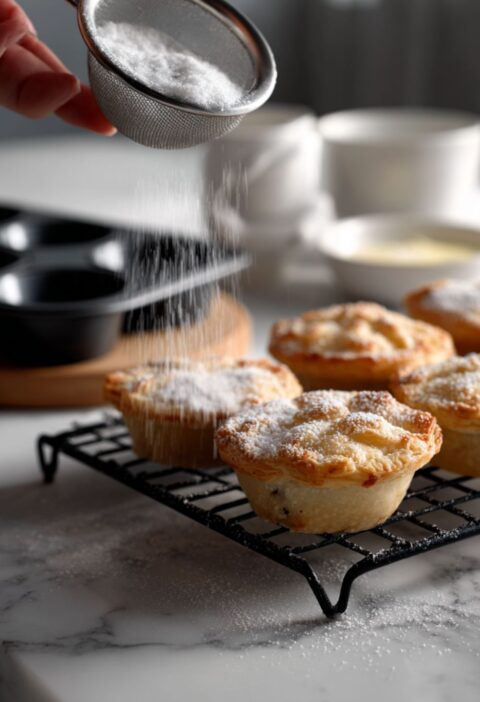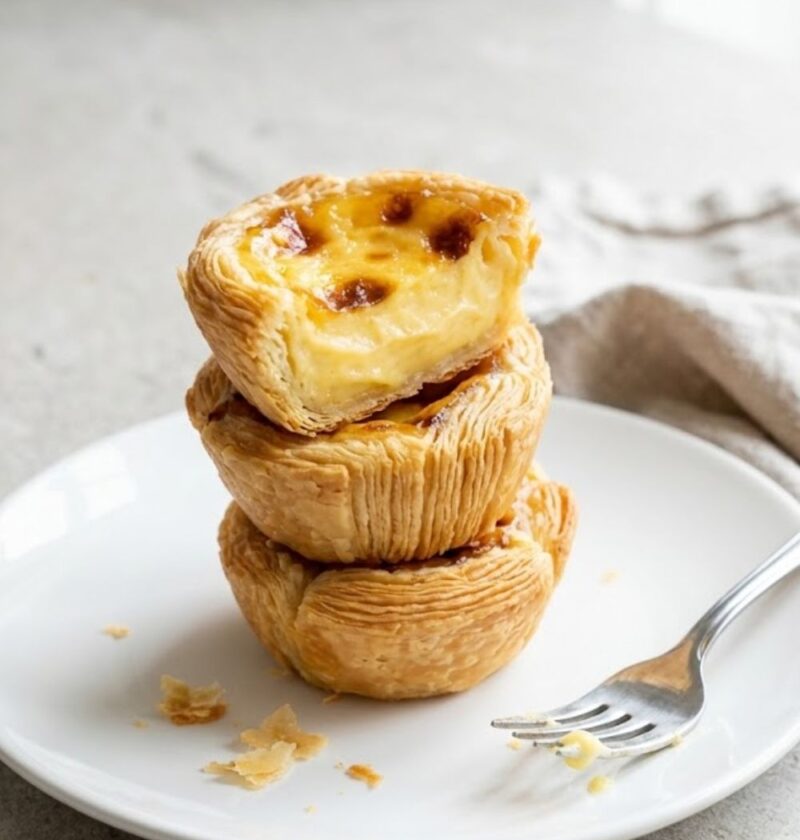
This Mary Berry Portuguese Custard Tarts recipe is a golden and crispy treat, which uses ready-rolled puff pastry and a smooth, homemade custard. It’s a classic teatime favorite, ready in about 55 minutes (plus cooling time).
Mary Berry Portuguese Custard Tarts Ingredients
For the pastry
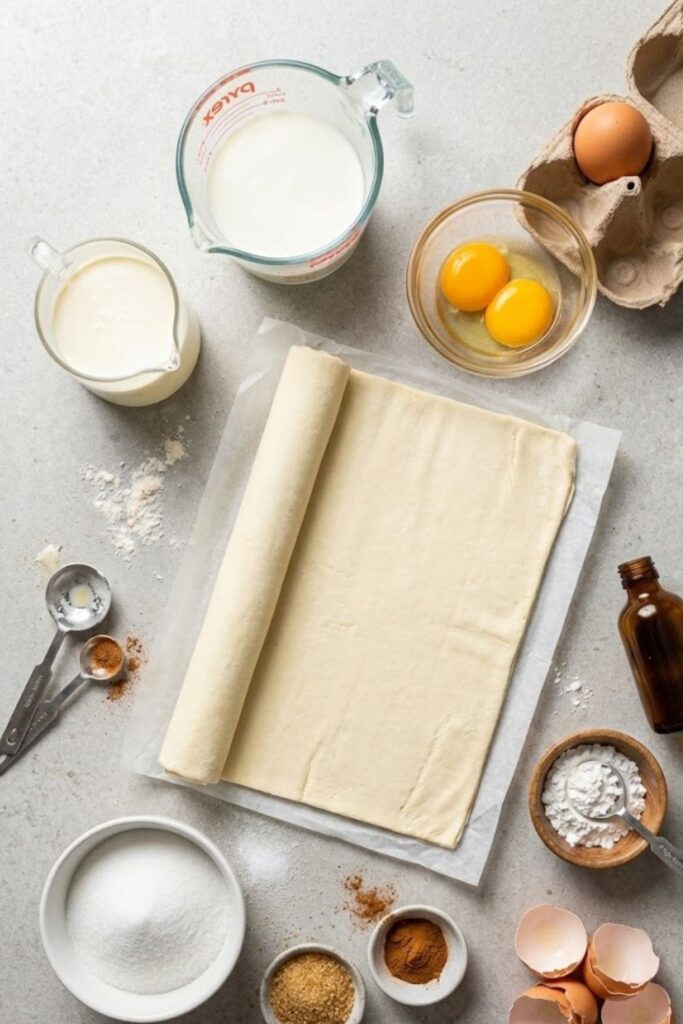
- 1 x 320g packet ready-rolled all-butter puff pastry
- Plain flour, for dusting
For the custard filling
- 250ml (9fl oz) milk
- 100ml (3½fl oz) pouring double cream
- 1 tsp vanilla extract
- 1 large egg
- 2 large egg yolks
- 115g (4oz) caster sugar
- 4 level tsp cornflour
Topping
- 15g (½oz) demerara sugar
- Ground cinnamon, for dusting (optional)
How To Make Mary Berry Portuguese Custard Tarts
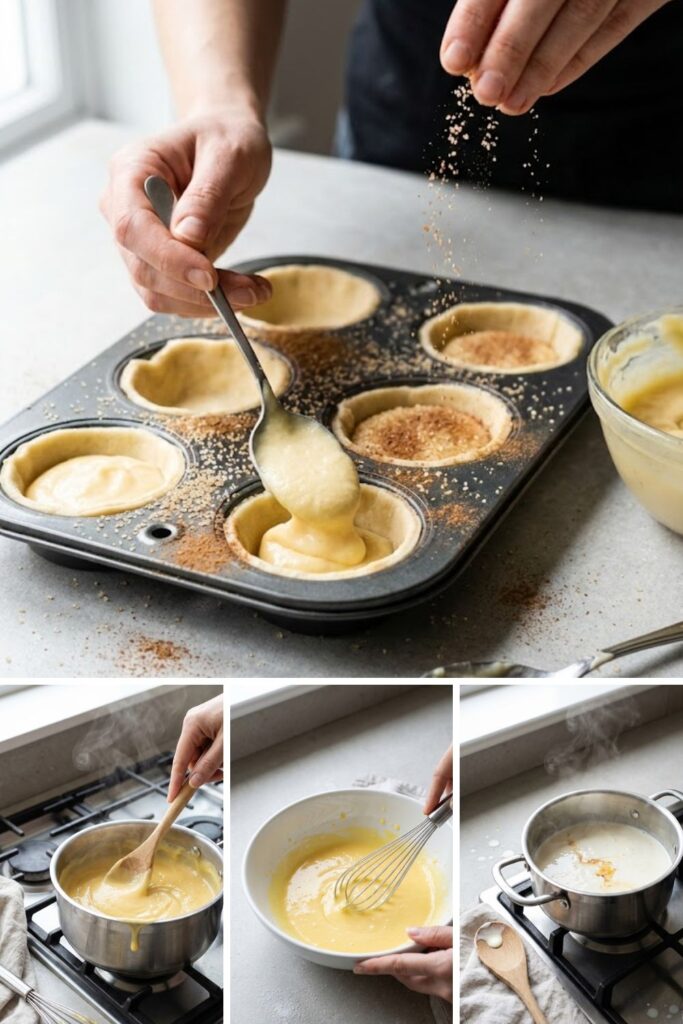
- Infuse the milk: Pour the milk, double cream, and vanilla extract into a saucepan. Place it over a medium heat until it is hand-hot (warm but not boiling).
- Whisk the egg mixture: Meanwhile, break the whole egg into a heatproof bowl. Add the egg yolks, caster sugar, and cornflour, then whisk by hand until well combined and smooth.
- Combine and thicken: Pour the warm milk mixture into the egg mixture, whisking constantly to prevent lumps. Pour the custard back into the saucepan. Place it over a medium heat and whisk continuously until it thickens to a rich custard consistency. Be careful not to overheat it.
- Cool the custard: Spoon the thickened custard into a clean bowl and cover the surface directly with a piece of cling film (this prevents a skin from forming). Set aside to become completely cold.
- Prep the pastry: Unroll the puff pastry and cut it in half lengthways to make two long strips. Sit the strips on top of each other, press down, and then cut the pastry in half widthways. You should have stacks of pastry.
- Cut the discs: Take one piece and roll it thinly on a floured surface to create a large piece big enough to cut 10cm (4in) discs from. Repeat with the remaining pastry until you have 10-12 discs in total.
- Line the tin: Press the pastry discs firmly into a 12-hole deep muffin tin, ensuring they go up the sides. Prick the bases of the pastry with a fork.
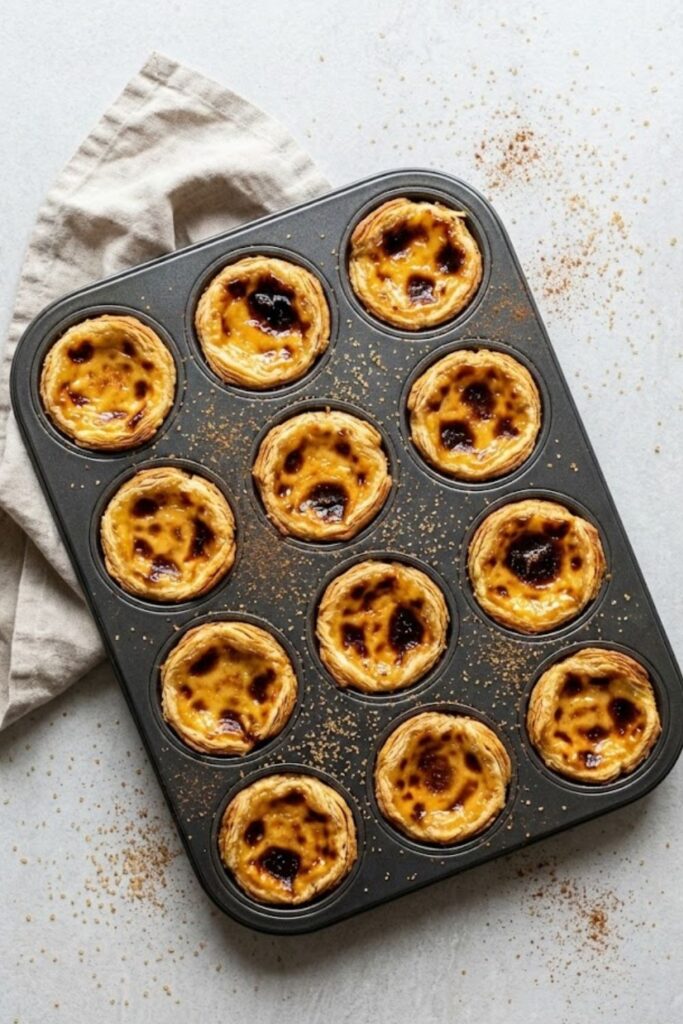
- Fill and bake: Spoon the cold custard into the pastry cases. Chill in the fridge for 30 minutes if you have time. Preheat the oven to 200°C (180°C Fan/Gas 6). Sprinkle the tarts with demerara sugar (and a pinch of cinnamon if desired) and bake for about 25–30 minutes, until the pastry is golden brown and the custard is set with caramelized spots.
Recipe Tips
- How to avoid a soggy bottom: Ensure the custard is completely cold before spooning it into the pastry cases. If the custard is warm, it will start to melt the butter in the pastry before it hits the oven, leading to a greasy, soggy base.
- Why use demerara sugar: Mary Berry uses demerara sugar on top because its larger crystals provide a delightful crunch and a rustic, caramelized finish that mimics the traditional charred top of a Pastel de Nata.
- How to get the perfect shape: When lining the muffin tin, press the pastry firmly against the sides. The pastry will shrink slightly as it cooks, so ensure it reaches slightly above the rim of the holes.
- Can I add fruit? In her “Mary Makes It Easy” variation, Mary adds sliced apricots on top of the custard before baking for a fruity twist.
What To Serve With Mary Berry Portuguese Custard Tarts
These tarts are a standalone treat, perfect for a mid-morning break.
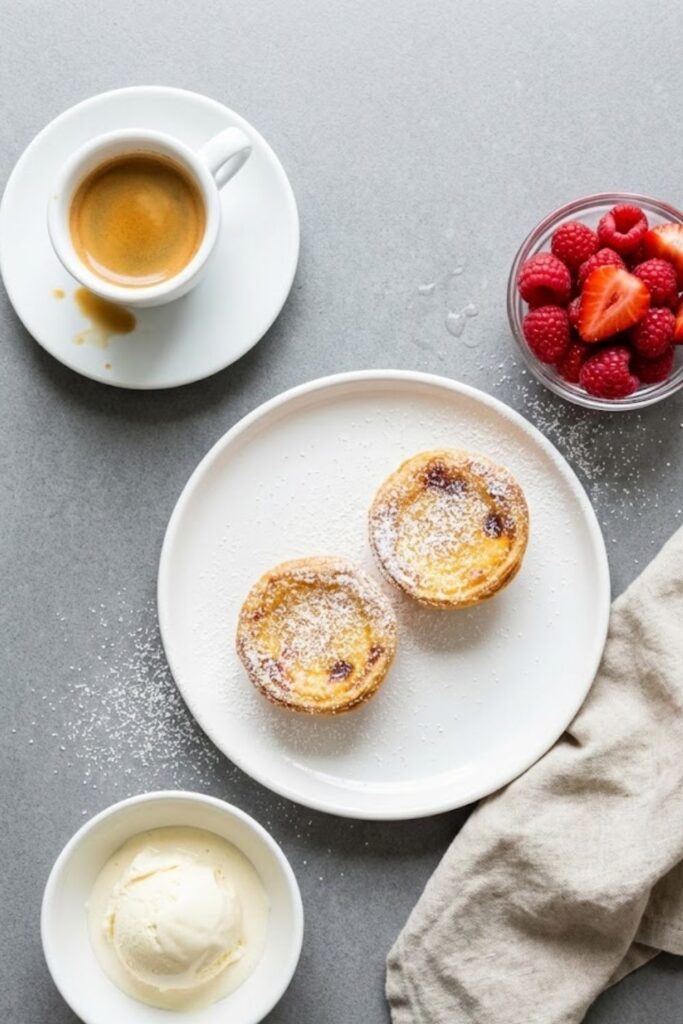
- Strong Espresso: The bitterness balances the sweet custard.
- Fresh Berries: Raspberries or strawberries add a fresh contrast.
- Vanilla Ice Cream: Turns a teatime snack into a decadent dessert.
- Icing Sugar: A light dusting for presentation.
How To Store Mary Berry Portuguese Custard Tarts
- Refrigerate: These tarts are best eaten fresh on the day they are made. However, you can store leftovers in an airtight container in the fridge for up to 3 days.
- Freeze: You can freeze the baked tarts for up to 1 month. Wrap them individually in foil. Defrost thoroughly at room temperature and warm them in a hot oven for 5 minutes to crisp up the pastry before serving.
Mary Berry Portuguese Custard Tarts Nutrition Facts
- Calories: 210kcal
- Protein: 3g
- Carbohydrates: 22g
- Fat: 12g
- Saturates: 6g
- Sugar: 14g
- Salt: 0.2g
Nutrition information is estimated per tart and may vary based on ingredients and cooking methods used.
FAQs
This usually happens if the custard wasn’t cooked enough on the hob before baking. It needs to be thick (like piping consistency) before it goes into the oven, as it won’t thicken much more during the short baking time.
You can, and it will be delicious (more like a classic English custard tart), but it won’t be a “Portuguese” tart. The signature of a Pastel de Nata is the flaky, laminated layers of puff pastry.
Authentic tarts are made in small, individual metal moulds, but Mary Berry’s recipe is designed to work perfectly in a standard 12-hole deep muffin tin, which most home cooks already own.
Try More Recipes:
Mary Berry Portuguese Custard Tarts Recipe
Description
A golden and crispy treat featuring flaky puff pastry filled with a rich, homemade vanilla custard and topped with caramelized sugar.
Ingredients
Instructions
- Heat milk, cream, and vanilla in a pan until hand-hot.
- Whisk egg, yolks, sugar, and cornflour in a bowl until smooth.
- Pour warm milk into the egg mixture, whisking constantly, then return to the pan.
- Whisk over medium heat until thickened, then transfer to a bowl, cover with cling film, and cool completely.
- Whisk over medium heat until thickened, then transfer to a bowl, cover with cling film, and cool completely.
- Stack strips of puff pastry and roll out to cut 10-12 discs.
- Press discs into a muffin tin and prick the bases.
- Fill with cold custard and sprinkle with demerara sugar.
- Bake at 200°C (180°C Fan) for 25-30 minutes until golden and set.
Notes
- Chill the pastry cases in the fridge before baking if the kitchen is warm; this prevents the pastry from shrinking.
- This recipe is based on Mary’s “Apricot Portuguese Tarts” base; you can add a slice of tinned apricot on top before baking for her fruity variation.
- Using all-butter puff pastry is essential for the best flavor and flaky texture compared to vegetable oil-based pastries.